
I Can Do All Things
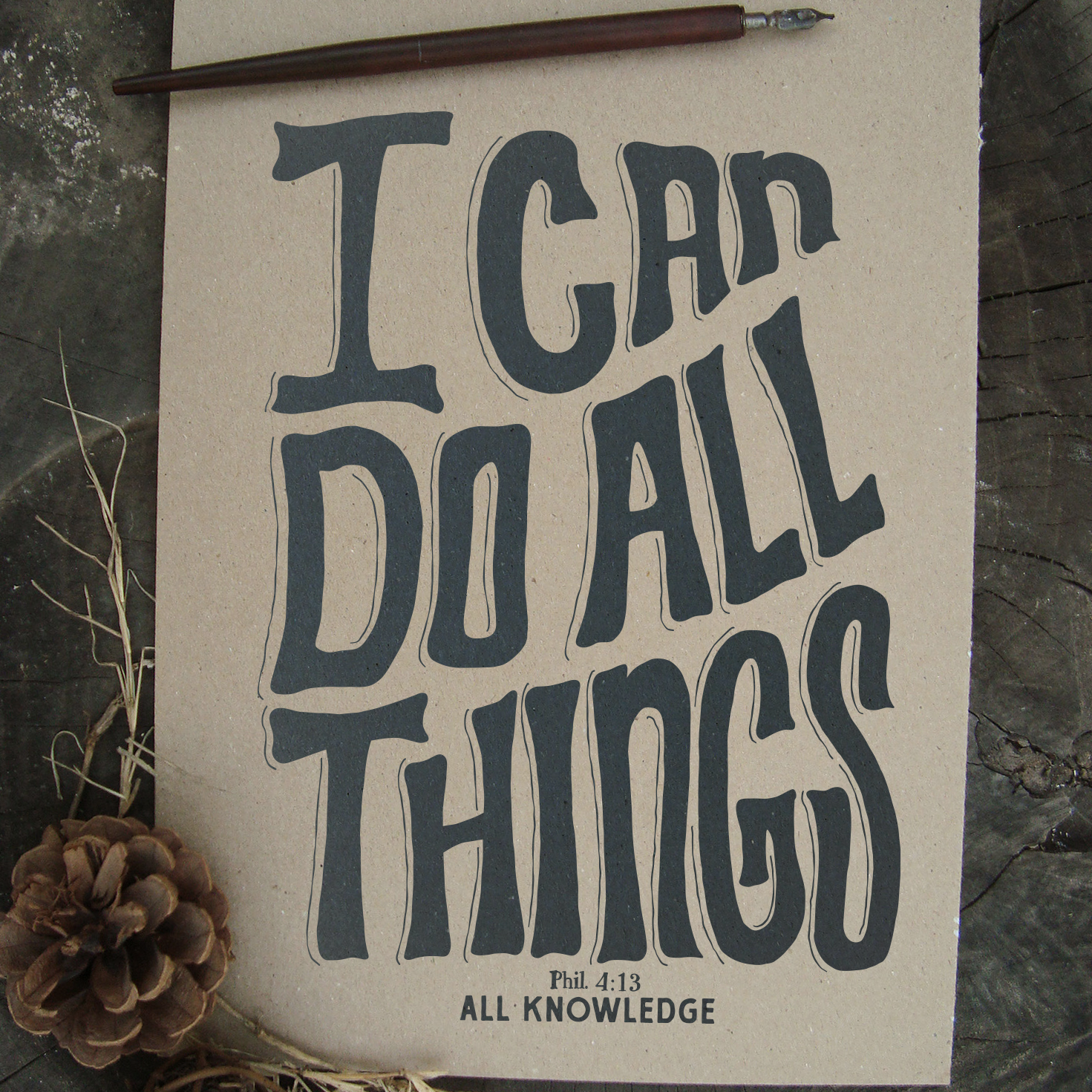
“I can do all things.” It’s a powerful phrase, and yet one of the most misunderstood.
On the surface, it sounds like ambition.
Like confidence.
Like raw self-belief.
Say it the wrong way and it becomes arrogance.
Say it literally and it becomes a lie.
None of us can do all things.
And yet, this line from Philippians 4 has endured for centuries and continues to resonate. Not because it feeds the ego—but because it points to something deeper.
The core idea behind “I can do all things” isn’t limitless power.
It’s unshakable peace.
The writer of Philippians 4 isn’t standing on a podium celebrating success.
He’s not winning. He’s not comfortable. He’s not in control.
He’s content. That’s the key most people miss.
Just before writing “I can do all things,” he says:
“I have learned to be content whatever the circumstances.
I know what it is to be in need, and I know what it is to have plenty.
I have learned the secret of being content in any and every situation…”
The strength being described isn’t the strength to dominate outcomes.
It’s the strength to remain whole—regardless of them.
To live with clarity when things go well.
To live with dignity when they don’t.
That kind of strength doesn’t come from performance, talent, or discipline alone.
Those things matter—but under enough pressure, they break.
Real strength comes from identity.
From knowing the true source of it.
What “I Can Do All Things” Really Means
It doesn’t mean you will win every fight.
It doesn’t mean you’ll avoid pain.
It doesn’t mean every dream unfolds the way you imagine.
It means this:
You can face abundance without being consumed by pride.
You can face scarcity without being destroyed by fear.
You can work hard without being enslaved by outcomes.
You can rest—without guilt.
You can move forward, whatever the season, without losing yourself.
That’s not arrogance.
That’s contentment.
And contentment is one of the rarest forms of strength in the modern world.
Ask. Seek. Knock.
There’s still action here. This isn’t passivity.
You ask.
You seek.
You knock.
You train. You study. You build. You risk.
Movement matters. Effort matters. Responsibility is real.
But you do it knowing the outcome isn’t fully yours to control.
It’s participation—without illusion.
The Stoic Paradox (And Why It Still Works)
Here’s where philosophy and faith quietly meet.
Stoicism teaches that peace comes from accepting what you cannot control and disciplining what you can. Few people argue with that. It’s rational. It’s observable. It works.
But Stoicism still places the full weight of meaning on the individual.
And for many, that’s enough.
The biblical perspective goes one step further. It says:
You are responsible—but not ultimate.
Active—but not alone.
Capable—but not self-sufficient.
That’s why the sentence was never meant to end at “I can do all things.”
It ends here:
“I can do all things through Christ who strengthens me.”
From this view, your worth is not something you earn.
It’s something you receive.
If that’s true, then no achievement is purely self-made—and no hardship is meaningless.
This perspective doesn’t weaken the individual.
It steadies them.
When success comes, there’s humility.
And when loss comes, there’s endurance.
This belief removes something heavy from our shoulders: the need to prove ourself.
If our value is already secure, success no longer defines us—and failure no longer destroys us. It’s rooted in identity, not performance.
This true is freedom and peace—because it takes away from us all the pressure to perform, to be perfect, to succeed at all costs. He is our strength.
And it is also humbling—because no success is ultimately ours alone.
“For from him and through him and for him are all things. To him be the glory forever!”
When things go well, gratitude replaces ego.
When things fall apart, meaning replaces despair.
That’s the kind of strength we believe in.
Not fragile.
Not borrowed from success.
Bold in conviction.
Loud in truth.
That’s what “I can do all things” was always pointing to.
Seek Knowledge Grow Strong